

Introduction
Data Analytics has become one of the most important skills in today’s digital world. Almost every business, from small startups to large enterprises, relies on Data Analytics to understand customer behavior, improve performance, and make better decisions. In simple terms, Data Analytics is the process of collecting, organizing, and analyzing raw data to extract meaningful insights that help in decision-making.
With the rapid growth of digital platforms, the amount of data being generated every second is massive. Companies use Data Analytics to identify patterns, predict future trends, and solve complex business problems. Whether it is marketing, healthcare, finance, or e-commerce, Data Analytics plays a key role in improving efficiency and accuracy.
For beginners, Data Analytics may seem complex at first, but once you understand the core concepts, it becomes a powerful skill that opens many career opportunities. In this guide, we will explore everything about Data Analytics, including its importance, step-by-step process, benefits, risks, and expert tips. This article is designed for both beginners and intermediate learners who want to build a strong foundation in Data Analytics and grow in this high-demand field.
What is Data Analytics?
Data Analytics is the science of examining raw data to draw meaningful conclusions. It involves various techniques, tools, and processes that help transform unstructured data into valuable insights.
In simple words, Data Analytics helps answer questions like:
- What happened?
- Why did it happen?
- What will happen next?
- What should we do about it?
There are four main types of Data Analytics:
- Descriptive Analytics – Focuses on understanding what has already happened.
- Diagnostic Analytics – Explains why something happened.
- Predictive Analytics – Forecasts future outcomes using historical data.
- Prescriptive Analytics – Suggests actions based on data insights.
Data Analytics is widely used in industries such as banking, healthcare, retail, education, and technology. It helps organizations improve decision-making, reduce risks, and increase profitability.
Why is Data Analytics Important?
Data Analytics is important because it helps organizations make informed decisions instead of relying on guesswork. In today’s competitive world, businesses that use Data Analytics effectively have a strong advantage over those that don’t.
One of the main reasons Data Analytics is important is its ability to uncover hidden patterns. These patterns help companies understand customer preferences, market trends, and operational inefficiencies.
Another key importance of Data Analytics is cost reduction. Businesses can identify unnecessary expenses and optimize their processes. For example, a retail company can use Data Analytics to manage inventory more efficiently and reduce waste.
Additionally, Data Analytics improves customer experience. By analyzing customer behavior, companies can offer personalized recommendations, better services, and improved support.
In short, Data Analytics is important because it:
- Helps in better decision-making
- Improves efficiency and productivity
- Reduces business risks
- Enhances customer satisfaction
- Increases profitability
Detailed Step-by-Step Guide
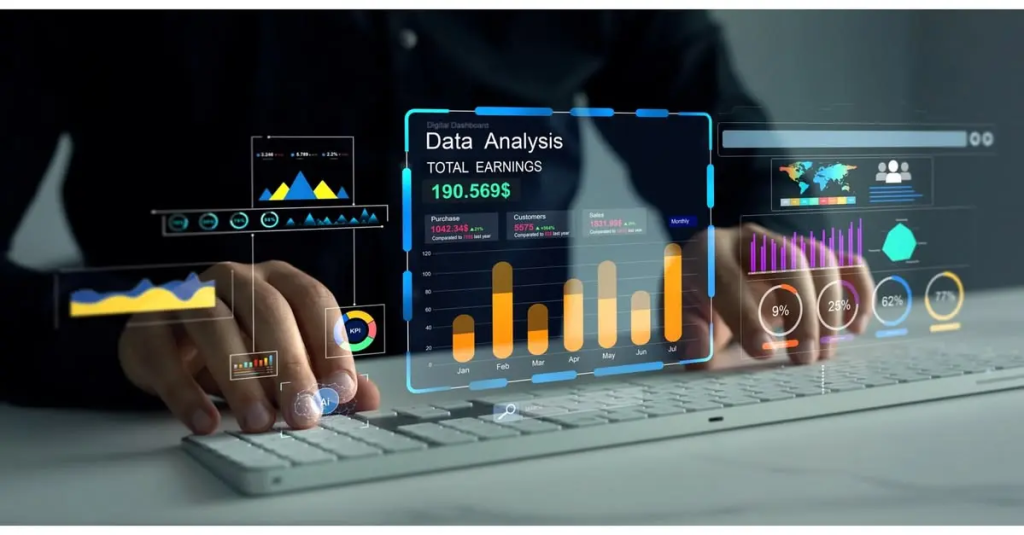
Step 1: Data Collection
The first step in Data Analytics is collecting data from different sources. These sources may include websites, social media platforms, surveys, or internal databases.
Step 2: Data Cleaning
Once data is collected, it often contains errors, duplicates, or missing values. Data cleaning ensures that the dataset is accurate and ready for analysis.
Step 3: Data Organization
After cleaning, data is organized into a structured format such as tables or spreadsheets. This makes it easier to analyze and interpret.
Step 4: Data Analysis
In this step, various analytical techniques are applied to extract insights. Tools like Excel, Python, or SQL are commonly used in Data Analytics.
Step 5: Data Visualization
Data visualization helps present complex data in a simple graphical format such as charts, graphs, and dashboards. This makes insights easier to understand.
Step 6: Interpretation of Results
Finally, the results are interpreted to make decisions. Businesses use these insights to improve strategies and performance.
Benefits of Data Analytics
- Helps businesses make data-driven decisions
- Improves operational efficiency
- Enhances customer understanding
- Identifies market trends and opportunities
- Reduces risks and uncertainties
- Increases revenue and business growth
- Supports better marketing strategies
Disadvantages / Risks
- Requires high-quality and accurate data
- Can be expensive to implement advanced tools
- Needs skilled professionals and training
- Data privacy concerns may arise
- Misinterpretation of data can lead to wrong decisions
Common Mistakes to Avoid
Many beginners make mistakes when learning Data Analytics. One common mistake is working with unclean data, which leads to inaccurate results. Another mistake is relying too much on tools without understanding the logic behind the analysis.
Some people also ignore data context and focus only on numbers, which can lead to wrong conclusions. Overcomplicating simple problems is another frequent mistake in Data Analytics.
To avoid these issues:
- Always clean your data before analysis
- Understand the problem before using tools
- Focus on insights, not just numbers
- Keep your analysis simple and clear
FAQs
1. What is Data Analytics in simple words?
Data Analytics is the process of studying raw data to find useful information that helps in decision-making.
2. Is Data Analytics a good career?
Yes, Data Analytics is a highly in-demand career with excellent growth opportunities across multiple industries.
3. Do I need coding for Data Analytics?
Basic coding knowledge in languages like Python or SQL is helpful but not always mandatory for beginners.
4. What tools are used in Data Analytics?
Common tools include Excel, SQL, Python, Power BI, and Tableau.
5. How long does it take to learn Data Analytics?
It usually takes 3 to 6 months to learn basic Data Analytics, depending on practice and consistency.
6. What industries use Data Analytics?
Industries like healthcare, finance, marketing, education, and technology heavily use Data Analytics.
Expert Tips & Bonus Points
To become successful in Data Analytics, consistency is very important. Practice real-world datasets instead of only theoretical examples. This helps you understand how Data Analytics works in real business scenarios.
Another expert tip is to focus on storytelling with data. Instead of just showing numbers, try to explain what the data means in a simple way.
Also, keep learning new tools and technologies because the field of Data Analytics is constantly evolving. Stay updated with trends like AI integration, machine learning, and automation in analytics.
Finally, build small projects to strengthen your portfolio. This will help you stand out in job applications and interviews.
Conclusion
Data Analytics is one of the most powerful skills in the modern digital era. It allows businesses and individuals to make smarter, faster, and more accurate decisions. From understanding customer behavior to predicting future trends, Data Analytics plays a critical role in every industry.
For beginners, learning Data Analytics may seem challenging at first, but with regular practice and the right approach, it becomes easier over time. The key is to understand the fundamentals and gradually move toward advanced concepts.
As the world becomes more data-driven, the demand for skilled Data Analytics professionals will continue to grow. This makes it an excellent career choice for anyone interested in technology, business, or problem-solving.